Mathematics
Lovelace developed the mathematical knowledge needed to engage deeply with Babbage's ambitious machine.
MATHEMATICS · IMAGINATION · COMPUTATION
In the 1840s, before an electronic computer existed, Ada Lovelace was thinking about what a programmable machine might someday be capable of doing.
THE STORY
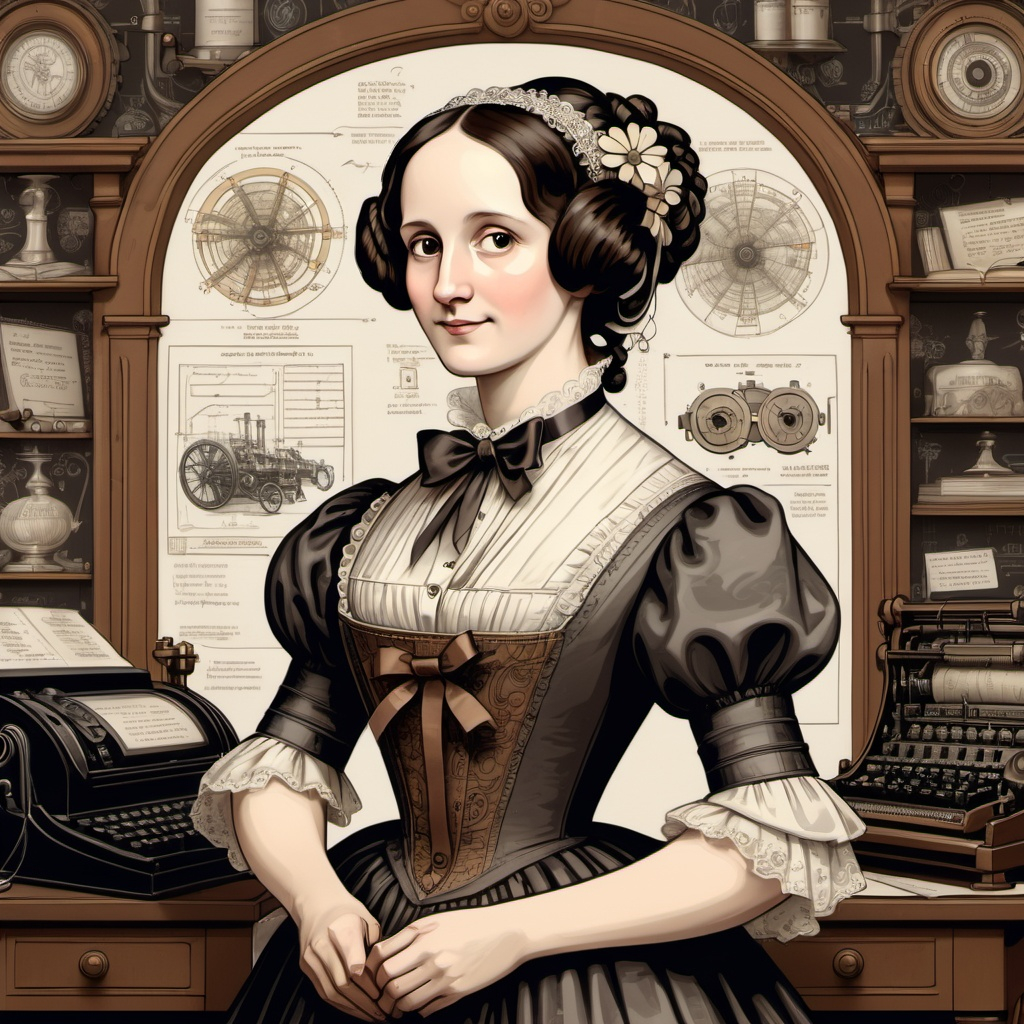
Ada Lovelace was an English mathematician and writer whose collaboration with Charles Babbage placed her at one of the earliest intersections of mathematics, machines, and programmable thought.
Babbage designed the Analytical Engine as a mechanical general-purpose calculating machine. Lovelace studied the design closely and recognized that its possibilities could extend beyond ordinary numerical calculation.
Her published notes explored how a machine following symbolic instructions could potentially manipulate information in broader ways—an idea that feels remarkably familiar in the age of modern computing.
Lovelace developed the mathematical knowledge needed to engage deeply with Babbage's ambitious machine.
Her notes described a detailed sequence of operations for calculating Bernoulli numbers with the Analytical Engine.
She considered how machines might work with symbols and structures beyond numbers used only as quantities.
INTERACTIVE TIMELINE
Select a year to explore a milestone in Lovelace's life and work.
1815
Ada was born in London in 1815. Her education would later include mathematics, science, and logic—subjects that helped prepare her for her work with Charles Babbage.
THE ANALYTICAL ENGINE NOTES
In 1843, Lovelace published her English translation of Luigi Menabrea's description of Babbage's Analytical Engine and added extensive notes of her own.
CONCEPT 01
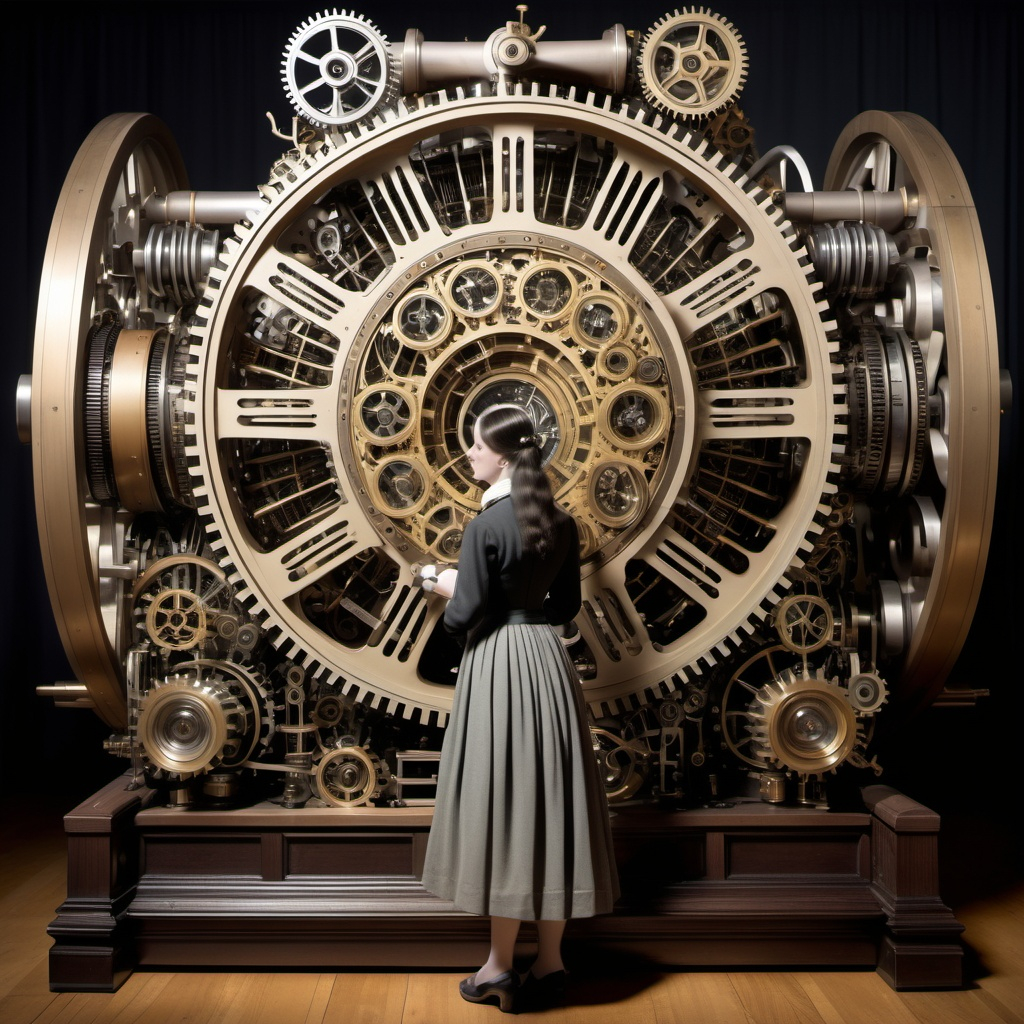
Lovelace examined how the Analytical Engine could follow sequences of operations encoded through mechanical instructions, helping explain the machine as more than a conventional calculator.
A NEW WAY OF THINKING
“The Analytical Engine weaves algebraical patterns just as the Jacquard-loom weaves flowers and leaves.”
— Ada Lovelace, 1843
LEGACY
Lovelace's extensive notes helped explain both the operation and broader possibilities of the Analytical Engine.
Her Bernoulli-number procedure became one of the most discussed early examples of an algorithm intended for execution by a machine.
Her work remains part of the history of computing, programming, mathematics, and the relationship between human creativity and machines.
BEHIND THE PROJECT
Semantic storytelling structure, accessible navigation, and interactive content regions.
Editorial layouts, responsive grids, typography, visual hierarchy, and mobile design.
Interactive timeline data, note exploration, mobile navigation, and dynamic content updates.
LEARN MORE
This educational portfolio project draws on established computing-history resources.
EDUCATIONAL TECHNOLOGY PROJECT